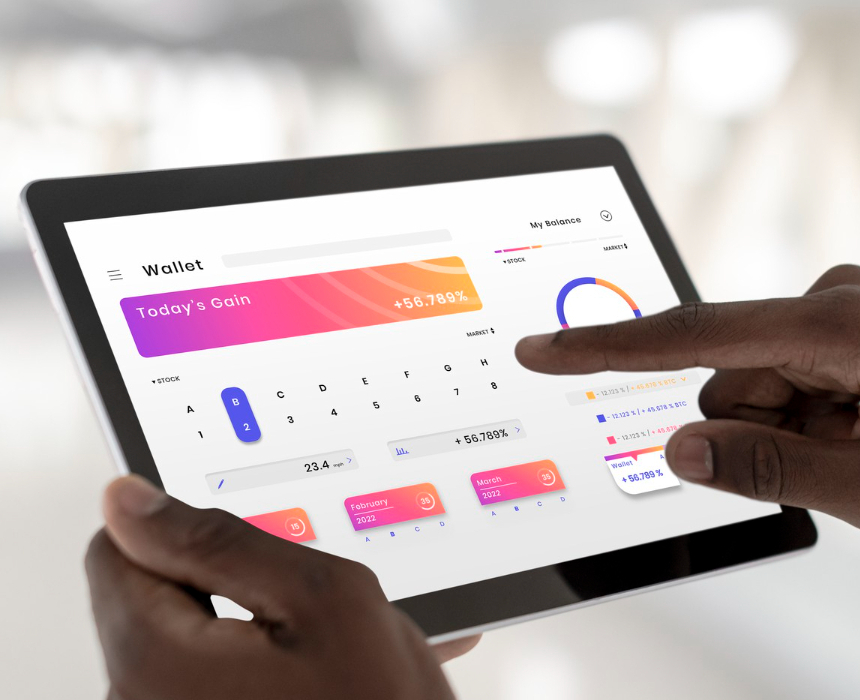
The reasons driving digital transformation differ from institution to institution, depending on their unique circumstances and challenges. For African companies, the challenge is all the more important as the continent remains dependent on digital facilities and access to the Internet, which are still very limited in certain regions. Although Africa is today at the beginning of the development of technologies, the continent is full of opportunities and has a strong digital potential. This is why organizations are complying with this digital revolution, which is positioned at the heart of the strategy to promote business and sustain the company.
Digital transformation is the process of completely replacing existing manual business processes with the latest digital alternatives. This type of reinvention affects all aspects of a business, not just technologies.
One of the challenges in the implementation phase that companies face is that they have to approach digital transformation as a project and not as a journey. This means that digitization, although supervised, does not have to follow a strict schedule. The Digital Transformation Director/Project Manager must be able to adapt to the company’s technological and human requirements. That is to say, it must take into account both market requirements that guide the choice of technologies required to satisfy them while taking into account the financial capacity of the company. But also the staff, their culture, their level of competence and the relationship they can develop vis-à-vis any change that the implementation of a technological process may entail.
- Beyond all these multiple challenges, entrepreneurial digital transformation is essential in Africa for many reasons, in particular:
- The need for organizations to remain resilient in the face of major economic difficulties such as that caused by the recent international health crisis (COVID-19) which, due to restrictive measures, has imposed on organizations a new work culture and a reorganization of processes once rigid.
- The need to get as close as possible to customer expectations, in particular those of the reduction, or even the permanent elimination of distance. Indeed, for companies operating in the finance sector such as banks and Microfinance (EMFs), digital services are underpinned by applications or virtual platforms. Thus, the difficulties related to the reduced mobility of users are removed. This preserves the portfolio and strengthens the position in the market.
- The desire to stay afloat in the face of the breakthrough of digital technologies within small businesses such as SMEs and VSEs that rely on them to accelerate their growth by presenting innovative and profitable business models that allow them to benefit from a certain number of financial advantages such as the reduction of service costs, a significant drop in the cost/revenue ratio.
For the specific case of EMFs, we can cite as advantages:
- Improved lending decisions. Indeed, the individual credit scoring of each client or member of an MFI is based on the exploitation of their digital data. And at the same time the credit granting process is faster thanks to process automation. Two important improvements both for microfinance which minimizes idle capital and for clients who obtain credit more quickly.
- Economies of scale. An optimal management policy for human resources costs with a view to extending its network and increasing market share in terms of the number of customers reached.
- Better engagement with customers. Reaching more customers isn’t necessarily good if you can’t be responsive to their needs. Digitization is creating new ways for MFIs to communicate with their clients, such as live chat via an app and social media. Clients thus feel valued, which promotes their loyalty, which in turn is likely to increase business opportunities at a reduced cost for the MFI.
In view of the above, however, it is worth pointing out that any digitization effort must be based on a clear formulation of the desired objective. In other words, each entity that plans to digitize all or part of its processes must ask itself the following fundamental questions: what improvement will the change due to digitization bring? And what are the means to measure the achievement of this objective?