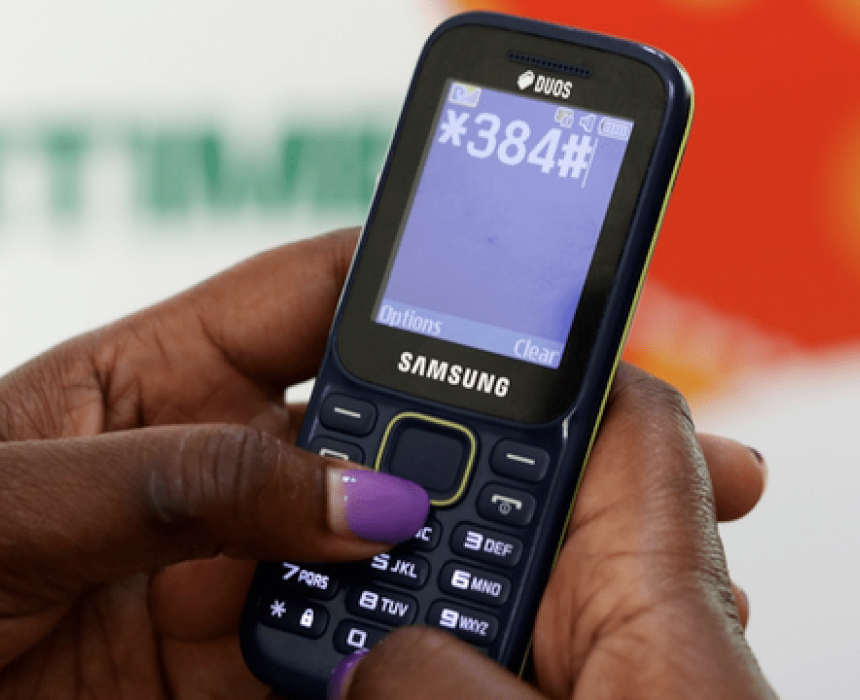
USSD (Unstructured Supplementary Service Data) is a mobile technology that is over 20 years old but still relevant today. When you press the star key * and enter any combination of numbers and end with the hash key “#” the code generated is a MMI (Man Machine Interface) which means you have a two-way conversation between your phone, machine. The USSD is a type of MMI code with the difference that when you type “sent” after the pound sign, the system sends the request to the mobile operator for execution.
If the USSD code is assigned to a particular service on your operator’s network, you will either have direct access to a service or to a simple menu. From there, you can use your operator’s services such as account verification, call menu, credit recharges or services from third party providers who work with your operator to reserve their own codes.
USSD applications are almost limitless. For example, a financial institution such as a bank or microfinance institution can use it to allow its customers to make transfers to their e-wallet or cell phone. Similarly, a government-owned company can use USSD to allow people to pay utility bills (water, electricity etc.). In general, users can be charged a nominal fee on their accounts or the cost is billed in reverse, i.e. the provider bears the cost instead and the service is free to the user.
Another element of the effectiveness of USSD shortcodes is that they do not require an internet connection to operate since they are a mobile application. Let alone a smartphone! All you need is access to a 2G network and a versatile phone. This is why it remains popular in developing areas such as Africa. USSD has helped bridge the gap between underserved mobile users and mobile application services. A key example is that access to mobile financial services has played an important role in financial inclusion.
However, this technology has areas for improvement, including reliability, which is lower than that of web applications. As messages are communicated in raw text files, there is a security risk. If a user’s phone is stolen or disappears, an intruder can access that account and mess with it.
To address this, a stronger back-end architecture is needed. End-to-end encryption reduces the risk of hacking into USSD sessions. Enabling multi-factor authentication makes it harder for anyone other than the phone owner to access USSD.
Serious mobile services on the African continent all have options based on USSD codes to amplify their impact. Now with ALPHA Core-Banking provided by ITECH SARL, USSD is now available to all members of the 250 microfinance brands operating in Cameroon that have adopted the platform.
The official launch of this new service is expected in the coming days.